Picking out the right 12v Inverteris pretty important, especially since they’re used in so many situations. Whether you’re out camping, facing an emergency, or just need to power up some devices while on the move, you want something you can count on. The thing is, the market’s packed with options, and honestly, finding the best one can feel overwhelming. In this guide, I’ll walk you through some of the top 12v Inverters available in 2026 so you can make a smarter choice.
When you’re powering your gear, you want to feel confident that The Inverter can handle the job. Good-quality inverters from brands like AIMS Power, Bestek, and Renogy tend to be pretty reliable. But it’s not just about picking any inverter—you should pay attention to its wattage, efficiency, and what extra features it offers. A lot of these inverters come with built-in protections, which are super important to avoid any hazards. Of course, reviews are helpful, but I’d advise you to be a little cautious with those overly glowing ones—they’re not always the whole story.
Ideally, your 12V inverter should strike a good balance between performance and price. Take a moment to really think about how much power you actually need. Some inverters might be overkill for your setup, while others might fall short. Focus on the features that really matter for you, and when in doubt, go for brands that are well-known—they tend to be more trustworthy and safer. With so many options out there, being a bit picky and doing your homework really pays off so you don’t end up with something that just doesn’t cut it.
Top Features to Look for in a 12V Inverter
When selecting a 12V inverter, understanding its key features is crucial. Consider the inverter's power output. This determines how many devices you can run simultaneously. Look for options that provide clear specifications. It’s essential to know the wattage you need for your appliances.
Efficiency also plays a significant role. Higher efficiency means less energy waste. This can lead to longer battery life, which is vital for off-grid users. An Inverter with a good balance between efficiency and performance ensures that your devices run smoothly.
**Tips:** Always check for overloading capacity. It’s common for users to underestimate their power needs. A reliable inverter should handle surges effectively. Don’t overlook safety features. Built-in protections against over-voltage and over-temperature can save your devices from damage, but these details are often buried in product info.
Lastly, consider portability. If you plan to travel, a lightweight inverter is more convenient. Compact designs often sacrifice certain functions. Reflect on what features you truly need. Something might look perfect on paper, yet fail in practical use. Choose wisely, keeping your unique requirements in mind.
Top Features Comparison of 12V Inverters for Global Buyers
Comparison of Different Types of 12V Inverters
When considering the right inverter for your needs, it's essential to understand the different types of 12V inverters available. There are primarily three categories: pure sine wave, modified sine wave, and Square Wave Inverters. Each type serves different applications and has its unique benefits and drawbacks.
Pure sine wave inverters provide cleaner power and are suitable for sensitive electronics. They produce a smooth waveform that mimics grid electricity. However, they can be pricier and may not be necessary for simpler devices. Modified sine wave inverters are more affordable and work well with many appliances. They might not be ideal for devices that require a stable power source, leading to potential malfunctions. Square wave inverters, while the least common, can meet basic needs but lack versatility.
Buyers should consider their specific requirements when choosing an inverter. For example, if your goal is to run a refrigerator or a sensitive home theater system, the need for a high-quality inverter is paramount. In contrast, if you're using it for basic lighting or charging, a simpler model could suffice. As you explore various options, weigh the trade-offs between cost, performance, and reliability in your 12V inverter 220V selection.
Best 12V Inverter Brands for Quality and Reliability
When exploring 12V inverters, quality and reliability become critical factors. Buyers often find themselves navigating a sea of options. The best brands in the market prioritize safety features and durability. They also offer excellent customer support, which is essential for users who may encounter issues.
One key aspect is the efficiency of a 1000w Inverter 12v. It should convert power effectively and minimize energy loss. High-quality inverters often have built-in protections against overloads and short circuits. This ensures longevity and performance, which many overlook initially. Customers should also pay attention to user reviews and expert opinions. Understanding real-world experiences can inform better choices.
However, finding the right brand can be challenging. Some users report frustrations with inconsistent performance. Others face difficulties with warranty claims. Thus, researching thoroughly before purchasing is imperative. Reliable brands tend to be transparent about their products and offer comprehensive documentation. Making an informed decision will lead to more satisfying outcomes.
How to Choose the Right Capacity for Your Needs
Choosing the right capacity for a 12V inverter is essential for efficient performance. The capacity of an inverter generally depends on the devices you plan to power. Understanding the wattage requirements of your appliances is crucial. For instance, a small device like a phone charger may only need about 20 watts, while a larger item like a mini fridge could require around 100 watts or more.
Tips: Check the labels on your devices to determine their wattage needs. It's also wise to account for a 20% safety margin. If you plan to run multiple devices, add their wattages together before choosing an inverter. This will help prevent overload and ensure that your setup runs smoothly.
Another factor is continuous versus surge capacity. Some devices draw more power at startup. Understanding this helps in choosing the right Car Inverter 12v 220v. If a tool needs 800 watts to start but only 600 watts to operate, your inverter should handle both levels. Ignoring this could lead to unexpected shutdowns, which can be frustrating when you’re on the road.
Inverters come in various sizes and configurations. Don’t rush the decision. Assess your energy needs meticulously. Sometimes, a slightly larger inverter provides better flexibility for future needs. It’s about finding balance, ensuring your devices work efficiently without overwhelming the inverter’s capacity.
Installation Tips for 12V Inverters
When installing a 12V inverter, proper attention to detail is crucial. Research shows that improper installation can lead to inefficiencies or even damage. A report by the Renewable Energy Association states that nearly 30% of inverter failures are linked to poor connections and inadequate wiring. Ensuring that connections are tight and properly insulated helps maintain performance.
Choosing the right gauge of wire is essential. The American Wire Gauge (AWG) standard indicates that using a lower AWG for higher current demand is vital. For example, if your inverter draws 100 amps, a 4 AWG wire is recommended. This can prevent overheating and improve safety. Remember that length matters too; longer runs may also require thicker wires.
Placement of the inverter should not be overlooked. Ventilation plays a vital role in the inverter's longevity. Inverters generate heat, and without ample airflow, they may overheat. A space of at least 12 inches around the inverter can help mitigate this risk. Potential signs of overheating include unusual sounds and odor, which should be checked immediately. Proper placement and venting can enhance efficiency for global users.
Common Applications for 12V Inverters
12V inverters are essential tools for converting DC power into AC power. They have a wide range of applications, making them valuable for everyday use. One common application is in recreational vehicles (RVs). RV owners often rely on 12V inverters to power appliances like microwaves and televisions while on the road. This allows for comfort and convenience during trips.
Another popular use is in solar energy systems. Many off-grid solar setups utilize a 12v Pure Sine Wave Inverter to ensure that household appliances run smoothly. The clean power output of a pure sine wave inverter is crucial for sensitive electronics. Users often find it enhances appliance lifespan and minimizes operational issues.
Additionally, these inverters support tasks like charging batteries or powering tools at remote job sites. However, users must consider their power needs carefully. An inverter with insufficient capacity can lead to disappointing performance. Knowing the appropriate wattage for specific devices is essential for effective use. It's a journey that requires careful planning and sometimes, trial and error.
Maintenance Tips for Longevity of 12V Inverters
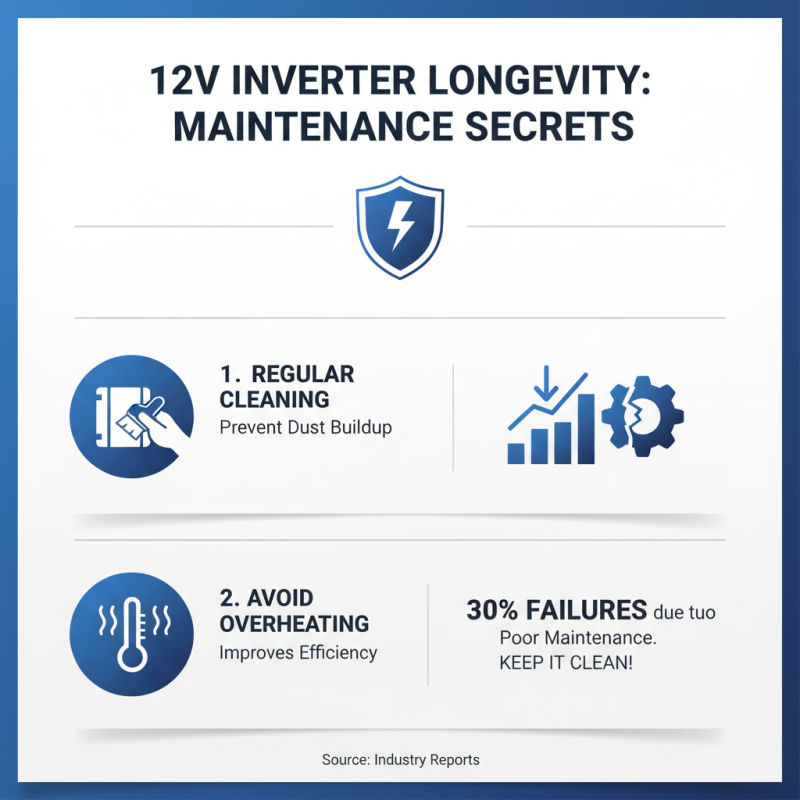
Maintaining a 12V inverter is essential for optimal performance. Regular cleaning is crucial. Dust can accumulate, causing overheating. This can lead to reduced efficiency. According to industry reports, nearly 30% of inverter failures result from improper maintenance. Ensure a clean environment for your inverter to thrive.
Battery health directly impacts inverter longevity. Regular checks on battery voltage and terminal connections can prevent future issues. Surveys reveal that about 25% of users overlook battery maintenance. Keeping cables clean and free of corrosion is vital. This small step can significantly affect the overall system's safety.
Monitoring temperature is equally important. Extreme heat can lead to inverter failure. Data indicates that inverters operating above 40°C can shorten lifespan by 50%. Ensure proper ventilation and avoid placing inverters in enclosed spaces. Reflecting on these practices can lead to better decision-making in inverter care.
Maximizing Efficiency: A Comprehensive Guide to 1000W and 2000W Pure Sine Wave Inverters for RV Solar Off-Grid Power Systems
When setting up an off-grid power system for your RV, choosing the right inverter is paramount for maximizing efficiency. This comprehensive guide focuses on the benefits of 1000W and 2000W pure sine wave inverters, which are essential for ensuring a stable and clean power supply. Unlike modified sine wave inverters, pure sine wave variants provide smoother operation for sensitive electronics, making them ideal for powering appliances like microwaves, televisions, and refrigerators without risking damage or performance issues.
These multifunctional inverter/chargers not only convert DC power to AC but also integrate solar charging and battery charging capabilities. Their compact design allows for portable use, providing an uninterrupted power supply that is particularly beneficial for RV enthusiasts who may travel off the grid for extended periods. The comprehensive LCD display offers users an intuitive interface to adjust settings, such as battery charging current and AC charger priority, thereby tailoring the power system to meet specific needs efficiently.
Moreover, advanced features such as remote monitoring and control, along with real-time fault alerts, enhance user experience significantly. This level of accessibility allows individuals to manage their power systems effectively from anywhere. The versatility of these inverters ensures they can be adapted for various applications, ranging from personal RV use to more extensive setups in homes or businesses, proving essential for anyone looking to enhance their off-grid living experience.
FAQS
: The three main types are pure sine wave, modified sine wave, and square wave inverters.
They provide cleaner power and are best for sensitive electronics but can be more expensive.
Consider the wattage requirements of your devices. Check their labels for accurate information.
Add the wattages of all devices you plan to connect.Accounting for a safety margin is wise.
Regular maintenance prevents overheating and failures. Dust buildup can significantly affect performance.
Poor battery maintenance can lead to serious inverter issues. Regular checks on voltage and connections help.
Ignoring surge capacity can lead to shutdowns when devices draw more power at startup.
Operating above 40°C can shorten lifespan significantly. Proper ventilation is crucial for longevity.
They are affordable and suitable for many appliances but may cause malfunctions for sensitive devices.
Not necessarily. A larger inverter offers flexibility but consider your actual needs before choosing.
Conclusion
When selecting a 12V inverter, it’s essential to consider key features such as power output, efficiency, and safety features. A comparison of different types of 12V inverters highlights their unique advantages, whether they are pure sine wave, modified sine wave, or inverter chargers. Selecting the right capacity is crucial for meeting your power needs, while installation tips can help ensure safe and effective setup.
Common applications for 12V inverters include recreational vehicles, marine use, and off-grid solar systems. Regular maintenance is important for the longevity of your 12V inverter, involving routine checks and proper cleaning. Understanding these factors will enable buyers to make informed decisions and choose the best 12V inverter tailored to their specific requirements.