Planning an RV camping trip? One thing you definitely don’t want to overlook is choosing the right equipment — especially The Inverter. It’s pretty much the heartbeat of powering your devices out in the wild, helping you enjoy a bit of home comfort even when you’re miles away. Honestly, finding the perfect inverter can feel kinda daunting with so many brands claiming to be the best. But hey, a solidInverter Pccan really make a difference. Just think about what you’ll need to power up. Small gadgets like chargers or lights? They might need a different inverter than if you’re running larger appliances. It’s a good idea to make a quick list of all the electronics you plan to bring along — it’s easy to forget those little items sometimes. Oh, and don’t forget about portability and how easy it is to handle. The inverter shouldn’t turn into a hassle while you’re traveling. Sometimes, things don’t work as expected, so doing a bit of research is smart. Check out reviews and chat with other campers if you can. Think about which features really matter to you — that way, you’ll end up with An Inverter that’s just right for your adventure. When you pick the right one, your outdoor experience will be that much better — trust me!

Understanding the Different Types of Inverters for RV Camping
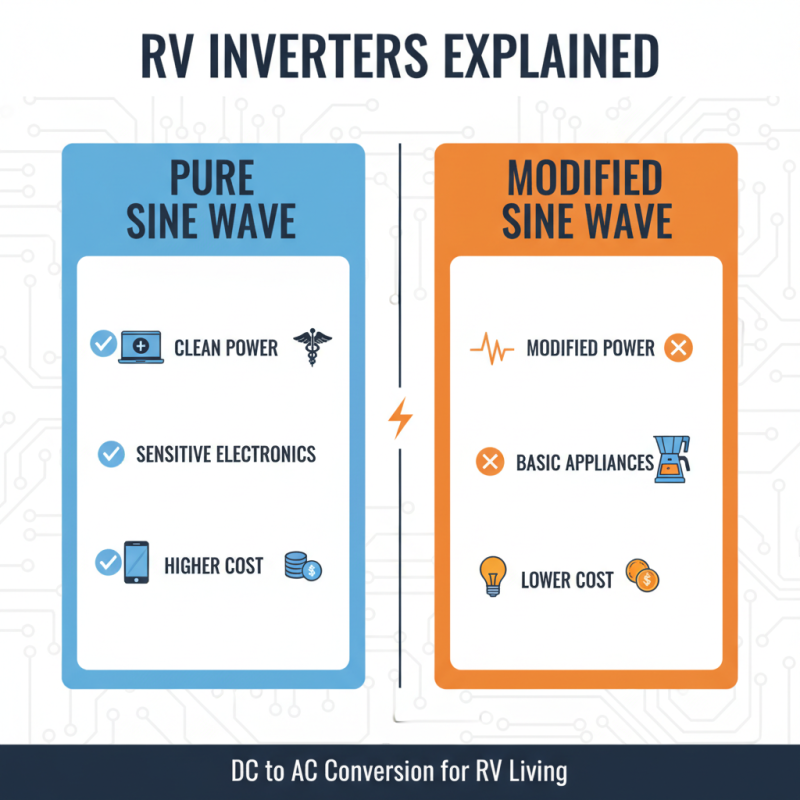
When it comes to RV camping, understanding the different types of inverters is essential. Inverters convert DC power from your RV's battery to AC power, allowing you to run household appliances. There are primarily two types: pure sine wave and modified Sine Wave Inverters. The pure sine wave is ideal for sensitive electronics. It provides clean energy for devices like laptops and medical equipment. However, it can be pricier.
Modified sine wave inverters are more affordable and suitable for basic electronics. They work well with simple devices, like lights and fans. However, they might cause issues with some sensitive appliances. Choosing the right type involves considering your power needs. Do you plan to charge multiple devices? Or only run basic items?
Another factor to consider is the inverter's power output. Matching the inverter capacity with your energy requirements is crucial. Too weak an inverter may fail under load. Too powerful, and you risk wasting energy. Always assess your usage before making a choice. Many campers overlook this step, leading to frustrating experiences during trips. Understanding these options can elevate your camping experience significantly.
Key Power Requirements: Calculating Your RV’s Energy Needs
When planning for RV camping, understanding your energy needs is crucial. Start by calculating the total wattage requirement for your appliances. For example, a typical recreational vehicle might need around 3,000 to 5,000 watts to run essential devices. Refrigerators often require 1,200 watts, while air conditioners can draw up to 2,000 watts. These numbers add up quickly.
Tips: Keep a list of your devices. Track their wattage ratings. This will simplify your calculations.
Knowing peak and continuous power is essential. An Inverter must support both aspects. Continuous power allows for ongoing use, while peak power handles surges. Some devices, like microwaves, need a surge that can be double their running wattage. This inconsistency can lead to overloading if not accounted for.
Tips: Consider a buffer. Aim for an inverter that offers 20% more power than you calculate. This ensures you can operate devices without stress.
Remember to assess your use patterns. Do you plan to run multiple devices simultaneously? If so, factor in how their power draws overlap. An inverter can be a great ally, but choosing the right one requires careful thought.
Evaluating Inverter Specifications: Watts, Voltage, and Waveform Types
When considering an inverter for RV camping, examining specifications is crucial. Key factors include watts, voltage, and waveform types. The wattage indicates how much power the inverter can handle. If you plan to use multiple devices, ensure the wattage exceeds your total need. It's all too easy to underestimate power consumption.
Voltage is equally important. Most RVs operate on 12V systems. An inverter that converts 12V to 120V will work for standard appliances. However, double-check compatibility with your devices. Misunderstanding this can lead to frustration on your trip.
Waveform types matter too. Pure sine wave inverters provide clean power, similar to a household outlet. They are suitable for sensitive electronics. However, modified sine wave inverters are cheaper but can be problematic for certain devices, such as TVs or microwaves.
Tips: Always consider future power needs. Planning ahead helps avoid issues during your camping adventure. Check your inverter setup. Proper installation is often overlooked yet critical for safety and efficiency. Keep in mind that the right Pv Inverter can make a significant difference in your overall experience.
Portable vs. Permanent Inverters: Which One Suits Your RV Best?
When choosing an inverter for RV camping, you’ll face a key decision: portable vs. permanent inverters. Portable Inverters are versatile. They can be easily transported and used for various outdoor activities. You can set them up quickly. Data suggests that about 70% of RV campers prefer these for short trips. Their lightweight design suits spontaneous adventures well.
On the other hand, permanent inverters are installed in your RV for lasting power. They provide a more stable power supply. Many users appreciate this option for extended camping trips. Permanent inverters tend to support higher wattage, making them ideal for larger appliances. Reports indicate that nearly 60% of those who travel full-time choose this type for its reliability.
**Tip:** Consider your power needs before deciding. Calculate the total wattage of your devices. This will help you select an appropriate Rv Inverter.
**Tip:** Think about your camping style. If you frequently change locations, a portable inverter might be best. However, if you’re settled for long periods, a permanent inverter could offer more convenience.
Balancing portability and power is vital. Each option has its merits and drawbacks. Be sure to weigh your choices carefully as they directly affect your camping experience.
Comparison of Portable vs. Permanent Inverters for RV Camping
Assessing Inverter Efficiency and Surge Ratings for Optimal Performance
When selecting an inverter for RV camping, efficiency and surge ratings play critical roles. Efficiency measures how much power is converted for use. High-efficiency inverters waste less energy. Look for models that offer a conversion rate above 90%. This maximizes battery life, especially during extended trips.
Surge ratings are equally important. Many appliances require extra power during startup. If your inverter can't handle it, you'll face issues. Choose an inverter with a surge rating that exceeds the combined wattage of your equipment. The starting wattage for devices like refrigerators can spike. Understand your power needs before making a choice.
Consider the limitations, too. No inverter is flawless. Sometimes, the efficiency degrades in extreme temperatures or altitude. Evaluate your environment. Real-life situations can differ from specifications. Test your inverter under typical load conditions. Are you using it for heavy-duty tools or light electronics? Each use case will demand a different approach to selection.
Safety Features to Consider When Choosing an RV Inverter
When selecting an inverter for your RV, safety features are crucial. Look for models with overload protection. This feature can prevent damage from excessive current. Another important aspect is short-circuit protection. This automatically shuts down the inverter if there's a fault, minimizing risks of fire or equipment damage.
Consider inverters with built-in cooling fans. They help maintain optimal temperatures during use. A thermal protection system can shut down the inverter before it overheats. It's essential to review each safety feature thoroughly. Not every inverter meets the highest safety standards.
Reading user reviews can provide insights into real-world performance. Some models may fail under specific conditions. Reliability is vital for a safe camping experience. Remember, a reliable inverter contributes to overall peace of mind while you're enjoying the great outdoors. Don't rush your decision; take the time to reflect on your needs.
Comparing Top Brands and Models: Industry Experts’ Recommendations
When choosing The Inverter for RV camping, understanding specifications is key. Industry data shows that over 70% of RV owners prioritize power output. This factor determines how many devices you can run. Inverters vary widely. Most models offer between 1000 to 4000 watts. You must match an inverter’s capacity to your requirements.
Battery compatibility is another crucial point. A report from the RV Association indicates that 65% of users face issues due to mismatched batteries. The Inverters also differ in terms of efficiency. Some models reach up to 90% efficiency, minimizing energy waste. Choosing an efficient inverter can save you money, especially on long trips.
Noise level matters too. According to a survey of RV enthusiasts, 55% prefer quiet inverters. Those that operate under 60 decibels are highly valued for peaceful camping experiences. Consider the operational environment. Factors like altitude and temperature can affect performance. Not every inverter will perform equally under varied conditions.
FAQS
: The primary purpose is to enhance user experience and improve efficiency in various tasks.
It simplifies routine activities, saving time and effort for users.
A compatible device and stable internet connection are often needed for optimal performance.
Yes, it supports multiple devices, allowing users to access it anywhere, anytime.
Users sometimes struggle with understanding features or troubleshooting minor issues.
Yes, some users may require time to fully understand all functions effectively.
Updates can be regular, improving features based on user feedback and technology trends.
Yes, customer support is usually accessible, but response times may vary.
It can boost productivity, but over-reliance may lead to interruptions if mismanaged.
Data protection measures are in place, yet users must remain cautious of privacy concerns.
Conclusion
Choosing the best inverter for RV camping requires a comprehensive understanding of different inverter types and their specifications. Start by calculating your RV's energy needs to determine the required power output. Inverters vary widely in wattage, voltage, and waveform types; hence, it's crucial to evaluate these specifications to ensure compatibility with your RV's appliances.
Additionally, consider the advantages of portable versus permanent inverters based on your camping style and space availability. Look for inverters with high efficiency and suitable surge ratings to guarantee optimal performance during high-demand situations. Safety features are also paramount when selecting an inverter for RV use, as they protect both the equipment and users. Lastly, consulting recommendations from industry experts can guide you in comparing top brands and models, ensuring a well-informed decision for a worry-free camping experience.