Lately, the demand for off-grid inverter solutions is really taking off worldwide. I was reading a recent market report, and it suggests that the off-grid inverter market could be growing at about 14.5% annually between 2021 and 2028. That’s pretty impressive! It kind of shows a real shift toward renewable energy, especially in those remote areas where traditional power isn’t easily available. Big names like Renogy and VICTRON are stepping up as some of the main players, offering reliable tech that people can count on.
But here’s the thing—buying an inverter isn’t as straightforward as it might seem. Not all inverters are created equal; they come with different features and levels of efficiency. Industry insights tell us that Inverter Efficiency can vary widely—from around 80% up to more than 95%. That’s quite a range, and it really means you gotta do your homework before making a choice. Picking the right off-grid inverter is pretty crucial if you want energy independence without running into surprises or problems down the line.
And, just a heads up for investors or serious buyers—be cautious about the pros and cons. Many Chinese manufacturers offer pretty attractive prices, but the quality and durability don’t always match up. It’s definitely worth digging into user reviews and checking out warranty details before you commit. Balancing a good price with long-term performance is key if you want your purchase to pay off. When exploring options, remember that choosing the right Inverter Grid Off can genuinely make a big difference in how effectively you manage your energy and support your sustainability goals.

Overview of Off Grid Inverters and Their Importance
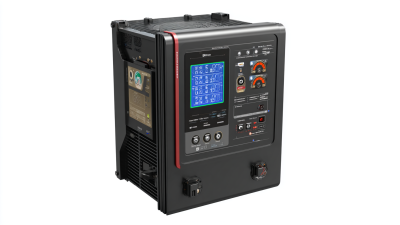
Off-grid inverters play a crucial role in renewable energy systems. They convert direct current (DC) from solar panels into alternating current (AC) suitable for household appliances. This technology is vital for those who want energy independence. In remote areas, where the grid is unreliable, off-grid inverters provide a dependable power source. Choosing the right model can enhance system efficiency and reduce energy costs.
The importance of off-grid inverters extends beyond convenience. They promote sustainability and reduce reliance on fossil fuels. However, users must be cautious. Not all inverters are created equal. Some may lack the necessary features for specific environments. Understanding the unique energy needs of a home is essential. Certain models can be overly complex for simple applications, leading to inefficiencies.
Buyers should also reflect on their choices. While there are advanced features available, simpler options may suffice. Evaluating the reliability and performance of inverters can save time and money in the long run. It’s vital to read reviews and seek expert opinions for informed decisions. The world of off-grid inverters is vast and sometimes overwhelming. Embracing this knowledge can empower consumers, leading to a more sustainable lifestyle.
Top China Best Off Grid Inverter Options for Global Buyers
| Model | Power Output (kW) | Input Voltage (V) | Efficiency (%) | Weight (kg) | Price (USD) |
| Model A | 3.0 | 48 | 90 | 20 | 400 |
| Model B | 5.0 | 48 | 93 | 25 | 600 |
| Model C | 2.5 | 48 | 88 | 18 | 350 |
| Model D | 4.0 | 48 | 91 | 22 | 550 |
Key Features to Look for in Off Grid Inverters
When selecting off-grid inverters, buyers should focus on key features that enhance reliability and efficiency. One critical aspect is The Inverter's power rating. A higher rating ensures it can handle energy demands efficiently. According to industry reports, systems that exceed 3 kW are increasingly popular among off-grid users. These inverters can power more appliances simultaneously, making them essential for larger setups.
Another vital feature is the inverter's waveform type. Pure Sine Wave Inverters are preferred for their ability to run sensitive electronics safely. Research indicates that nearly 50% of off-grid installations now use pure sine wave inverters, reflecting their growing importance. Additionally, buyers should consider battery compatibility. An inverter that supports various battery types can significantly enhance system versatility, accommodating different storage solutions.
Efficiency ratings also play a crucial role in choosing the right Grid Off Inverter. Systems with a minimum of 90% efficiency help reduce energy losses. However, some inverters may have misleading ratings, making thorough research essential. Reviews and comparisons from credible sources will help verify these specifications. Making informed decisions based on these features ultimately contributes to a more sustainable and effective off-grid experience.
Top China Best Off Grid Inverter Options for Global Buyers
This chart illustrates the key features of various off-grid inverters, including efficiency, surge power capacity, and weight. These factors are crucial for global buyers when selecting the best inverter for off-grid applications.
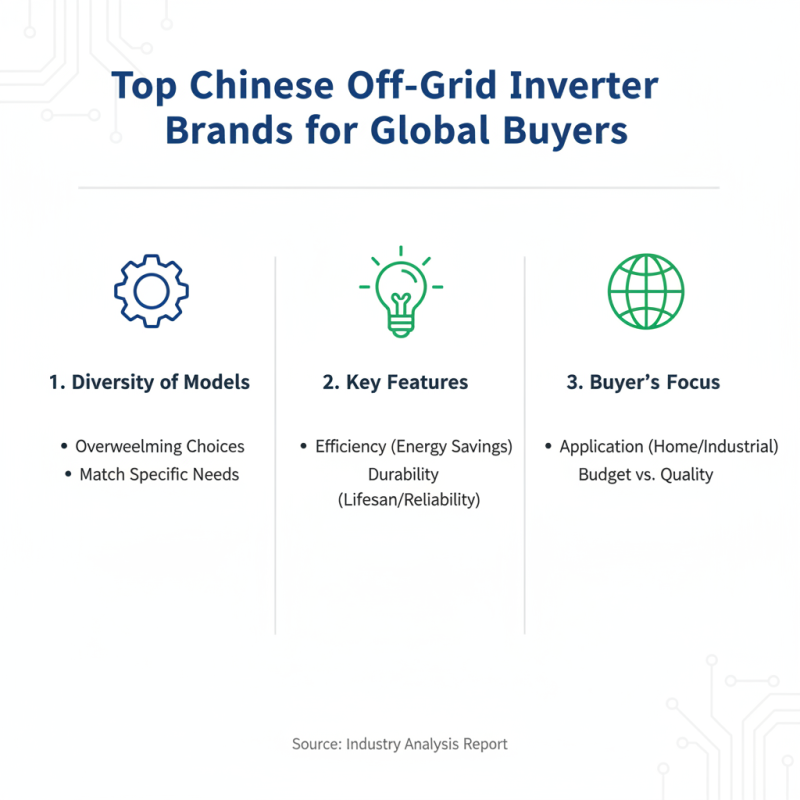
Top Chinese Off Grid Inverter Brands for Global Buyers
When exploring the top Chinese off-grid inverter brands, buyers should consider several factors. The diversity of inverter models available can be overwhelming. Some brands focus on efficiency, while others prioritize durability. Global buyers need to match these features to their specific needs.
Many Chinese manufacturers have strong reputations. They offer products that are both innovative and reliable. Technologies like MPPT (Maximum Power Point Tracking) are common, enhancing solar energy utilization. Yet, quality control can vary significantly among different brands. Researching user feedback helps highlight these inconsistencies.
Additionally, customer service plays an essential role in the buying decision. Some brands are responsive and helpful, while others may lack support. This can lead to frustration, especially during installation. Therefore, potential buyers must weigh performance against after-sales service. Choosing the right inverter is not just about specifications; it’s about ensuring a seamless experience.
Comparison of Efficiency and Performance Metrics
When evaluating off-grid inverter options, efficiency and performance metrics are crucial. According to industry reports, the average efficiency of off-grid inverters typically ranges from 90% to 95%. This means that for every 1,000 watts of solar energy generated, only 50 to 100 watts might be lost in conversion. A slight drop in efficiency can significantly impact overall energy savings, especially for users relying solely on solar power.
Performance metrics, such as surge capacity and output waveforms, also play a vital role. Most top off-grid inverters provide modified sine wave output, which is suitable for simple appliances. However, more advanced models offer pure sine wave output, enhancing compatibility with sensitive electronics. Reports indicate that pure sine wave inverters tend to perform between 5-10% better under heavy loads when compared to modified sine wave inverters.
Despite these advancements, some users still face challenges. Installation complexity can deter potential buyers. Moreover, many off-grid systems require regular maintenance to maintain optimal efficiency. Feedback within user communities highlights these areas of concern. Prospective buyers should carefully consider their specific energy needs and evaluate the long-term impact of efficiency metrics on their overall energy system.
Cost Analysis of Leading Off Grid Inverter Models
The cost of off-grid inverters varies significantly based on features and performance. Recent industry reports indicate that the price range for reliable models starts around $800 and can exceed $3,000. The efficiency of these inverters is crucial. A recent study showed that models with over 90% efficiency generally lead to lower long-term costs through energy savings. This makes them an attractive option for many global buyers.
When analyzing cost versus quality, some buyers may overlook the importance of warranty. A strong warranty can mitigate future repair costs. Inverters may seem cheaper initially, but models lacking extended warranties can result in higher expenses. Moreover, maintenance often surprises new users, as they learn that regular checks are necessary. A good Pv Inverter Off Grid model might not be the cheapest upfront but could provide long-term reliability, offering better return on investment.
Interestingly, market trends reveal an increasing demand for smart inverters, which incorporate connectivity features. These advanced options can cost up to 20% more. However, the ability to monitor performance remotely can save time and prevent mishaps. It emphasizes the need to balance upfront cost with potential savings and efficiency. Global buyers should weigh these factors carefully when selecting their off-grid inverter models.
User Reviews and Experiences with Chinese Off Grid Inverters
User reviews and experiences with off grid inverters often highlight both benefits and challenges. Many users report successful energy independence. They appreciate the reliability of Chinese off grid inverters designed for various environments. Some models perform especially well in remote areas, providing power without connection to the grid.
However, users note a learning curve. Installation can be tricky, and improper setup may lead to performance issues. Buyers often mention needing thorough research before choosing an inverter. It's essential to check specifications and compatibility with existing systems.
**Tips:** Always look for user feedback on different models. Engage in forums for firsthand experiences. Testing a unit in different conditions can provide valuable insights. Consider consulting professionals for installation, as it can significantly impact long-term performance. The right Off Grid Pv Inverter can enhance both sustainability and convenience.
Future Trends in Off Grid Inverter Technology and Market
The off-grid inverter market is evolving rapidly. With an increasing demand for renewable energy, innovation is crucial. Many manufacturers focus on improving efficiency and reliability. New technologies aim to reduce energy loss and enhance system integration.
Battery storage solutions are gaining traction. They provide stability and backup power in fluctuating conditions. Advances in battery technology are leading to longer lifespans and faster charging. However, the costs associated with these systems can be a hurdle for some buyers.
There is also a growing interest in smart technology. IoT-enabled inverters offer remote monitoring and control features. These systems can optimize energy usage based on real-time data. Nonetheless, as with any tech, user-friendliness remains a challenge, requiring ongoing reflection from developers. The industry must address these complexities to match consumer expectations effectively.
FAQS
: Focus on power rating, waveform type, and battery compatibility for efficiency.
A higher rating allows inverters to handle greater energy demands efficiently.
Pure sine wave inverters are recommended for safe operation of sensitive devices.
Efficiency typically ranges from 90% to 95%, impacting energy savings significantly.
Installation complexity and maintenance requirements can deter potential buyers.
Yes, advancements focus on improving efficiency and enhancing system integration.
They provide stability and backup power but may have higher costs.
IoT-enabled inverters offer remote monitoring to optimize energy usage.
Complex features can pose challenges, leading to mixed user experiences.
Some ratings may mislead; thorough research is essential for informed choices.
Conclusion
Off Grid Inverters play a crucial role in enabling energy independence by converting stored solar or wind energy for use in remote locations without a grid connection. When selecting an Off Grid Inverter, buyers should consider key features such as efficiency, power capacity, and durability, which significantly impact performance and usability in various applications.
This article explores prominent Chinese Off Grid Inverter brands that cater to the global market, examining their efficiency metrics and performance comparisons. A thorough cost analysis of leading models provides insights into the best value options available. Additionally, user reviews reflect real-life experiences, highlighting satisfaction and potential drawbacks. As the market evolves, future trends in Off Grid Inverter technology suggest advancements that could enhance efficiency, sustainability, and accessibility for all users.